
Individual Therapy for Relationship Patterns & Attachment Wounds in TN:
Building connection without losing yourself - and understanding the patterns that quietly shape how you love.



Relationship patterns show up for everyone
Relationship patterns build slowly through small compromises and the hope that this time will be different.
We’re here to understand what shaped you, including patterns that once helped you cope but might not feel supportive anymore.These patterns can reflect anxious, avoidant, or disorganized attachment, codependency, relationship anxiety, or dynamics shaped by inconsistent or emotionally unsafe connection.
Within relationship patterns, you might notice:
wanting reassurance but struggling to trust
pulling away when closeness starts to feel vulnerable
shutting down instead of saying what you need
leaving interactions replaying what you did “wrong”
overanalyzing deserving to ask for what you need
staying longer than you want because leaving feels scarier
minimizing behavior that actually hurts
overexplaining your needs so they sound more “reasonable”
scanning for tone shifts or mood changes
confusing intensity with intimacy

Through therapy, we examine these patterns and start to learn where they come from.


patterns show up in all types of relationships
Sometimes this shows up in long-term partnerships. Sometimes in dating: when different people end up with the same dynamic.
Sometimes what we learned to call love was actually anxiety, inconsistency, earning connection, or managing someone else’s mood. For some, this also includes high-control or narcissistic dynamics where love felt conditional, inconsistent, or confusing. When that’s your baseline, healthy love can feel unfamiliar or even boring.
We don’t just analyze your relationships.
We slow them down.
I pay attention to your body cues: where you tense, where you shut down, and where you talk yourself out of your intuition.
I name patterns gently but clearly. That might mean challenging the belief that you’re “too much.” It might mean acknowledging manipulation or unhealthy dynamics when they’re present. We don’t over-label — but we also don’t gaslight you out of your own experience.
Insight here isn’t judgment, it’s clarifying and often deeply validating.

Therapy isn’t about blowing up your life.
It’s about creating enough clarity that you can see what’s happening and choose from a place that feels more grounded and self-honoring.

Healthy dynamics don’t mean perfect communication or zero conflict, but look like:
-
![Black plant icon.]()
trusting your instincts sooner instead of explaining them away
-
![Black flower icon.]()
knowing your standards and not apologizing for them
-
![Black flower icon.]()
staying emotionally grounded when tension shows up
-
![Black moon icon.]()
not spiraling when communication shifts or uncertainty appears
-
![Black heart icon.]()
recognizing red flags without talking yourself out of them
-
![Black plant icon.]()
building trust and vulnerability without losing yourself
-
![Black flower icon.]()
feeling safer with physical and sexual intimacy — without pressure, performance, or losing connection to yourself
-
![Black asterisk icon.]()
choosing partners who feel consistent, reciprocal, and emotionally safe
-
![Black moon icon.]()
feeling less pulled into anxious or avoidant attachment cycles
-
![Black flower icon.]()
knowing being alone is better than abandoning yourself










healthy connection feels calm
Over time, you stop shrinking to be chosen. You start choosing from a place of clarity instead of fear. You’re not too much. You’re not asking too much.
You may just be asking the wrong people.


If you keep finding yourself in relationships where you feel anxious, overlooked, or disconnected, I see you.
You want healthy connection. Communication. Emotional and physical intimacy. Growth.
And yet somehow, you keep ending up in dynamics that leave you over-functioning, second-guessing, or wondering if you’re the common denominator.
Maybe you’ve started believing you’re too sensitive. Too much. Not flexible enough. Maybe you’ve internalized the idea that if you just did something differently, it would finally work.


Attachment styles aren’t random and they don’t mean you’re the problem.
Attachment is simply the way you learned to stay connected. For many people, these patterns are shaped by relational trauma, emotional neglect, or experiences where connection felt unpredictable or conditional.
Some of those strategies still serve you. Some cost you.
This work is about understanding the difference and building the self-trust to start choosing differently.
This is about understanding how you show up in relationships and building confidence to show up differently.
In therapy, we don’t just talk about your relationships - we practice new ways of experiencing them.
That might look like noticing emotional triggers in real time, experimenting with boundaries inside sessions, strengthening communication, and building tolerance for vulnerability without losing yourself.


Together in therapy, we may explore:
where self-abandonment creeps in
what your actual needs are (not just what keeps the peace)
distinguishing healthy standards from self-sacrifice
tolerating uncertainty in dating without chasing reassurance
recognizing manipulation or inconsistency earlier
practicing boundaries that feel calm instead of reactive
building vulnerability without losing yourself


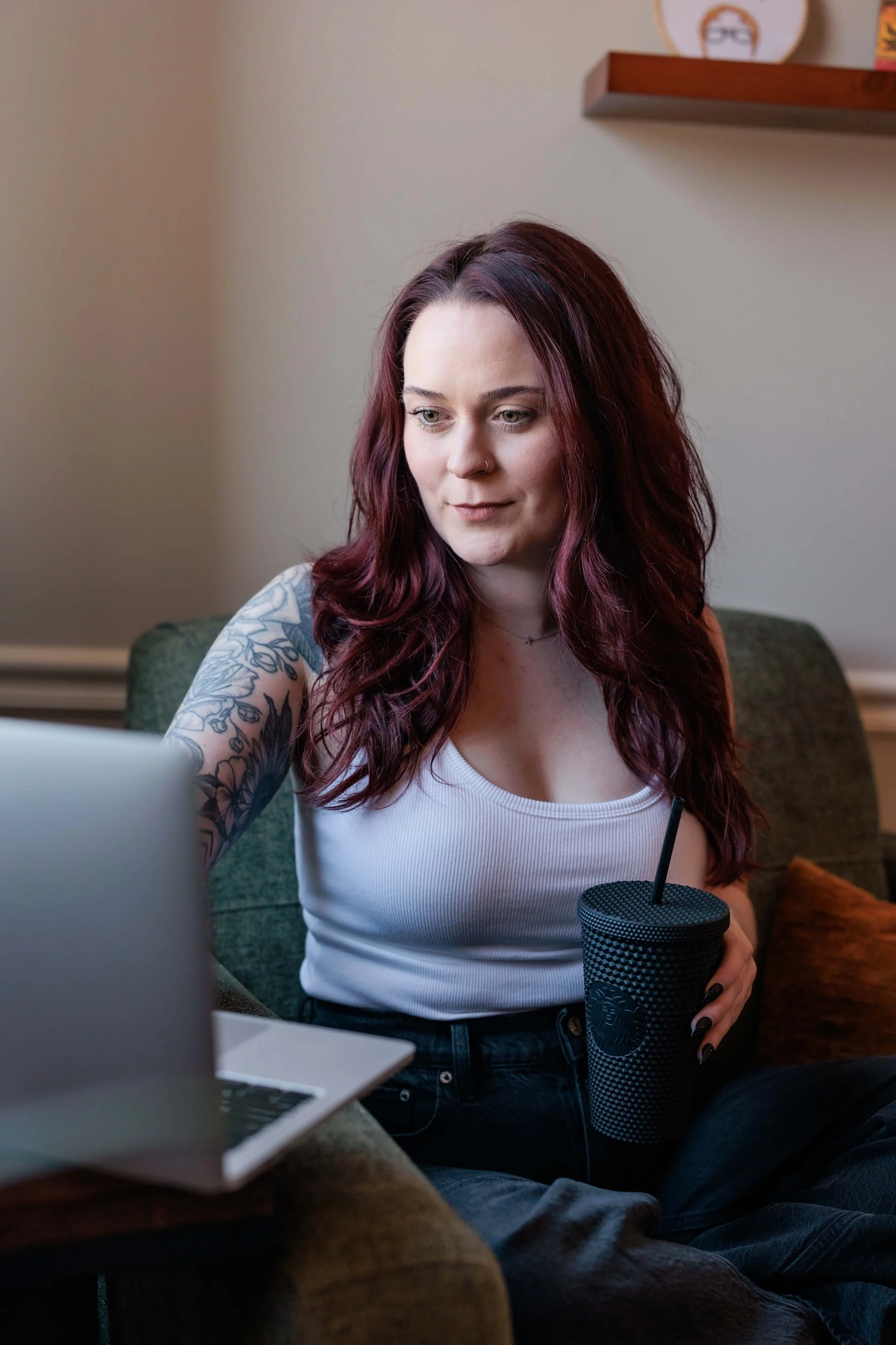
therapy with Kaylie
I integrate attachment-focused therapy, somatic awareness, parts-work exploration, and more with my therapy practice.
Alongside deeper processing, we actively practice boundaries, communication, emotional regulation, and trust-building skills that translate into real relationships - not just insight.
We’re not trying to make you more guarded or encourage trauma dumping on everyone you meet: we’re helping you stay connected to yourself even while loving someone else.


Start your therapy journey
Kaylie offers therapy in-person near Nashville, Tennessee. She offers therapy for complex trauma, anxiety, relationship patterns, and grief and loss.
Her holistic therapy approach is where insight meets nervous system healing.
This is a space where your patterns make sense, your nervous system can exhale, and you don’t have to perform to belong.